

Comparing Cooling Technologies for Homes Without Ducts
When considering cooling solutions for a home without existing ductwork, homeowners in October 2026 have several distinct options, each with its own set of advantages and considerations. These range from temporary, room-specific solutions to sophisticated whole-home systems. Understanding the core differences in efficiency, noise, longevity, and installation can guide us toward the best fit for your unique needs.
Here’s a comparison of the primary cooling technologies available:
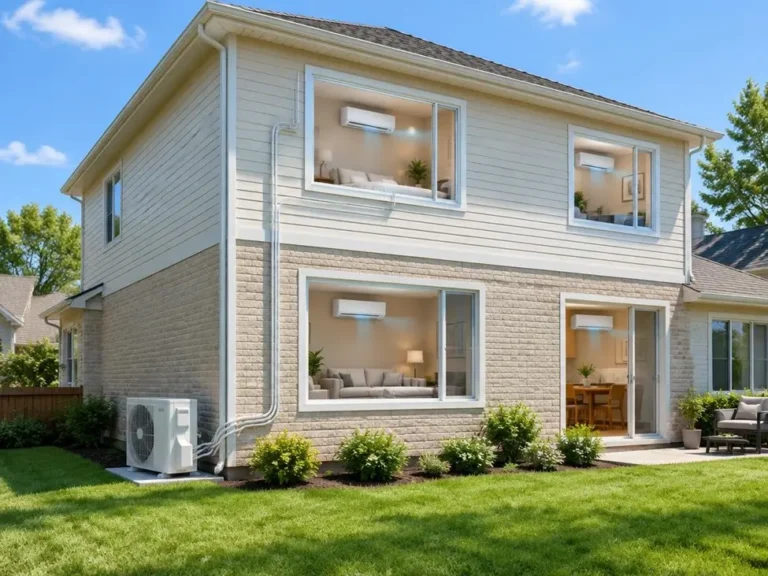
Feature Ductless Mini-Splits High-Velocity Small-Duct Systems Window AC Units Portable AC Units Through-the-Wall Units Typical SEER Rating 16-28+ (up to 35 SEER2) 14-18 10-15 8-12 10-15 Noise Level (dB) 19-32 (indoor unit) Varies, generally quiet 50-60 52-60 50-60 Lifespan (Years) 15-20+ 15-20+ 7-10 3-7 10-12 Installation Complexity Professional (moderate) Professional (high) DIY/Simple (low) DIY (very low) Professional (moderate) Best Use Case Zoned, whole-home, efficiency Whole-home, aesthetics, humidity Single room, temporary Single room, temporary/rental Single room, permanent Ductless Mini-Splits stand out as a highly efficient and flexible option. They consist of an outdoor compressor/condenser and one or more indoor air-handling units, connected by a small conduit that requires only a 3-inch hole through an exterior wall. This design completely bypasses the need for ductwork, eliminating the 20% to 30% cooling power loss often seen in traditional ducted systems due to leaks. Modern mini-splits are renowned for their quiet operation, with indoor units often running as low as 19-32 decibels, making them literally quieter than a whisper.
High-Velocity Small-Duct Systems offer an alternative that can provide a “central air” feel without extensive renovations. These systems use flexible, two-inch mini-ducts that can be snaked through existing wall cavities, attics, or floor joists with minimal disruption. While their SEER ratings are generally lower than the most efficient mini-splits, they excel in dehumidification, removing approximately 30% more moisture from the air than conventional systems. This can make a room feel cooler at a higher temperature setting. The small, discreet vents blend well with historic architecture, making them a favorite for preserving aesthetic integrity.
Window AC Units are the classic, budget-friendly solution for cooling individual rooms. They are relatively easy to install for a handy homeowner and require no professional intervention. However, they are notably loud, typically operating at 50-60 decibels, which can be disruptive. They also block part of a window, can be a security concern, and are the least energy-efficient option, with SEER ratings generally between 10 and 15.
Portable AC Units offer the ultimate flexibility, requiring no permanent installation. They are ideal for renters or very temporary cooling needs. However, they are generally the least efficient option (8-12 SEER) and can be quite noisy (52-60 decibels). Single-hose portable models create negative pressure by exhausting hot air, which can draw warm, unconditioned air back into the room, reducing their effective cooling power by up to 40%. For this reason, dual-hose models are always recommended if choosing a portable unit.
Through-the-Wall Units, sometimes called PTACs (Packaged Terminal Air Conditioners), are common in hotels but can be a permanent solution for individual rooms in homes. They require a dedicated opening in an exterior wall, offering a more secure and permanent alternative to window units. Their efficiency and noise levels are comparable to window units, but they offer a cleaner, more integrated look.
Exploring Power Pro Ductless Cooling Options for Whole-Home Comfort
For homeowners seeking a comprehensive, energy-efficient, and minimally invasive solution for cooling their entire home without ductwork, Power Pro ductless cooling options offer a compelling choice. These systems, primarily ductless mini-split heat pumps, leverage advanced inverter technology to provide precise, multi-zone comfort. A single outdoor condenser can power multiple indoor units, allowing for customized temperature control in different areas of your home. This is particularly beneficial for older homes where maintaining architectural integrity is paramount, as only small penetrations are needed for the line sets.
Beyond temperature control, ductless systems significantly improve indoor air quality. Many units feature multi-stage filtration that can capture up to 99.9% of allergens, dust, and pet dander, preventing the accumulation of pollutants common in traditional ducts. They also excel at dehumidification, running at lower speeds for longer periods to extract more moisture from the air, which is crucial for comfort and preventing mold growth, especially in humid climates.
Core Efficiencies of Power Pro Ductless Cooling Options
The efficiency of ductless mini-splits is a major draw. They boast impressive SEER ratings (Seasonal Energy Efficiency Ratio) ranging from 16 to over 28, with some models achieving SEER2 ratings as high as 35. This is largely due to their variable-speed compressors and inverter technology, which allows the system to adjust its output precisely to meet the cooling demand, much like cruise control in a car. This avoids the energy waste of traditional “all on/all off” systems.
Furthermore, many modern ductless systems utilize newer refrigerants like R-32, which are not only more environmentally friendly but also up to 12% more efficient than older refrigerants. In October 2026, these systems are also increasingly recognized for their cold climate heating capabilities. As heat pumps, they can provide efficient heating even when outdoor temperatures drop significantly, with many models maintaining full heating output down to 5°F. This makes them a viable primary heating source in many regions, and an excellent complement for hybrid heating approaches, where they can integrate seamlessly with existing radiators or boilers for year-round comfort.
Multi-Zone Integration with Power Pro Ductless Cooling Options
One of the most powerful features of ductless systems is their ability to create multi-zone comfort. Each indoor unit operates with an independent thermostat, allowing occupants to set different temperatures in different rooms. This means you can keep a bedroom cool at night while maintaining a warmer temperature in unoccupied living areas, leading to significant energy savings (up to 40% compared to conventional ducted systems).
Indoor units come in various styles to suit different aesthetic preferences and room layouts. Wall-mounted air handlers are the most common, but options like ceiling cassettes (recessed into the ceiling for a discreet look) and floor consoles (ideal for spaces where wall mounting is challenging) are also available. The line set routing for these systems is typically designed for minimal visual impact. Often, the refrigerant lines, condensate drain, and electrical wiring are bundled together and run through a small conduit along the exterior of the house, or even concealed within walls where possible, ensuring aesthetic concealment.
Sizing, Home Preparation, and Envelope Optimization

Before installing any new cooling system, especially in older homes, proper planning is essential. The condition of your home’s building envelope—its shell of insulation, windows, and air sealing—plays a critical role in how effectively and efficiently any cooling system will perform. Older homes often suffer from issues like thermal bridging, where heat easily transfers through less insulated structural elements, or significant air leaks that allow conditioned air to escape and unconditioned air to enter. Addressing these issues first can drastically reduce your cooling load, allowing for a smaller, less expensive, and more efficient HVAC system. Improving insulation and sealing air leaks can reduce cooling costs by 15% to 30%.
Preventing Short Cycling with Manual J Load Calculations
The biggest mistake homeowners can make when selecting a new cooling system is “eyeballing” the size of the unit. An oversized system is not better; it leads to a phenomenon called short cycling. This means the unit turns on and off too frequently, never running long enough to effectively remove humidity from the air. The result is a room that feels cold but clammy.
To prevent this, a professional HVAC contractor will perform a Manual J load calculation. This comprehensive assessment considers numerous factors beyond just square footage, including:
- Home age and construction materials
- Window types, sizes, and orientation
- Insulation levels in walls, attic, and floors
- Local climate data (temperature, humidity)
- Number of occupants and heat-generating appliances
This calculation precisely determines your home’s specific cooling loads, ensuring the system is perfectly sized for optimal performance, comfort, and efficient moisture removal (latent heat management).
Electrical Infrastructure and Envelope Upgrades
Older homes, particularly those built before 1970, often have outdated electrical systems. Many were designed with 60-amp or 100-amp service, which might not be sufficient to support the dedicated circuits required by modern, high-efficiency cooling systems. An HVAC assessment will include an evaluation of your electrical panel. In some cases, an electrical panel capacity upgrade to 200-amp service might be necessary to safely and reliably power your new system.
Beyond electrical, prioritizing attic insulation and thorough air sealing around windows, doors, and utility penetrations is crucial. These “building envelope” improvements are foundational. They reduce air infiltration, minimize heat gain, and directly contribute to lower energy consumption and overall energy cost reduction. There’s no point in investing in a high-efficiency AC system if the cold air is just leaking out of your home.
System Economics, Tax Incentives, and Maintenance Requirements
Understanding the financial implications of each cooling option involves more than just the initial purchase price. We must consider operating costs, available incentives, and long-term maintenance.
Feature Ductless Mini-Splits High-Velocity Small-Duct Systems Window AC Units Portable AC Units Through-the-Wall Units Upfront Purchase Range Higher Highest Lowest Very Low Low to Moderate Operating Costs Very Low (due to efficiency) Moderate High Very High High Maintenance Intervals Annually (professional) Annually (professional) As needed (DIY filters) As needed (DIY filters) Annually (professional) DIY Filter Cleaning Every 4-6 weeks N/A Monthly Monthly Monthly In October 2026, significant financial incentives are available for energy-efficient cooling solutions. The Inflation Reduction Act continues to offer a federal tax credit under Section 25C, covering 30% of the equipment and installation costs for qualifying heat pumps, up to a maximum of $2,000 annually. This can significantly offset the initial investment in high-efficiency ductless mini-split systems. Additionally, many local utility providers offer their own utility rebates, often ranging from $500 to $2,000, for switching to high-efficiency ductless systems. It’s always wise to check for these 2026 energy incentives in your specific area.
To ensure the longevity and peak performance of your ductless system, regular maintenance is key. This includes:
- Reusable filter cleaning: Indoor unit filters should be washed every 4 to 6 weeks during peak cooling season.
- Coil inspections: The outdoor condenser unit should be kept clear of debris, leaves, and cottonwood seeds.
- Professional tune-ups: An annual professional tune-up is recommended to check refrigerant levels, clean coils, clear condensate drains, and verify electrical connections.
With proper care, ductless mini-splits have an impressive equipment lifespan of 15 to 20 years or more, significantly outlasting window (7-10 years) and portable (3-7 years) units.
Frequently Asked Questions About Non-Ducted Cooling
Can ductless mini-split heat pumps handle sub-freezing winter temperatures?
Absolutely. Modern cold-climate heat pumps are engineered for impressive low-ambient operation. While older heat pumps struggled in freezing temperatures, 2026-era technology in mini-splits can maintain full heating output even when outdoor temperatures drop to 5°F. In many regions, this makes them a highly efficient and effective primary heating source, capable of covering 70% to 85% of annual heating needs, often more efficiently than traditional furnaces or boilers.
How long does a multi-zone ductless installation take?
One of the significant advantages of ductless technology is the speed and minimal disruption of installation. Unlike traditional central air retrofits that can involve weeks of messy construction, a typical three-zone mini-split system can usually be installed in just 1 to 2 days. The process involves mounting the indoor units, drilling small holes for the exterior line sets, connecting the outdoor condenser, and performing electrical and refrigerant hookups. The non-invasive mounting and quick turnaround mean you won’t be displaced from your home for an extended period.
How much energy can be saved by replacing window units with ductless systems?
The energy savings can be substantial. Comparing the SEER ratings alone highlights the difference: window units typically range from 10-15 SEER, while ductless mini-splits achieve 16-28+ SEER. This translates to significantly lower energy consumption. ENERGY STAR certified mini-splits use up to 60% less energy than standard heating and cooling systems. Furthermore, the zoned cooling capability of ductless systems allows you to only cool the rooms you are using, preventing energy waste in unoccupied areas. This targeted approach can lead to an energy consumption reduction of up to 40% compared to conventional ducted systems, resulting in noticeable utility bill savings over the long term.
Conclusion
Adding cooling to a home without existing ductwork no longer means sacrificing efficiency or comfort. From the advanced, multi-zone capabilities of ductless mini-splits to the discreet integration of high-velocity systems, homeowners in October 2026 have a wealth of options designed to meet diverse needs and architectural styles. Prioritizing home preparation, including insulation and air sealing, and ensuring proper system sizing through Manual J calculations, are critical steps toward maximizing performance and energy savings.
Whether your goal is architectural preservation, achieving year-round comfort, embracing modern energy standards, or enhancing your home’s long-term value, the right ductless cooling solution can transform your living environment. By carefully comparing these options and leveraging available incentives, you can enjoy a cooler, more comfortable home for years to come.
Also READ
- making-sense-of-your-first-online-accounting-class/
- features-whole-home-air-conditioning/
- /best-air-purifiers-home-symphony/

