
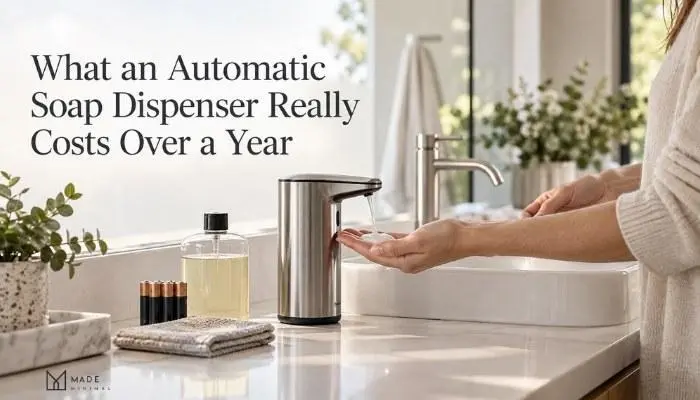
A decent automatic soap dispenser usually runs between $30 and $100 in Australia. That sounds pretty reasonable on its own. But once you factor in soap refills, batteries, and the odd clean, your actual yearly spend can creep up by another $20 to $50.
We’re Made Minimal, a Brisbane-based store that helps Australians find affordable, space-saving home products. We’ve looked at a lot of bathroom accessories, and soap dispensers are one of those budget items people tend to overlook.
The thing is, most of us just want a hygienic bathroom without overthinking every small purchase. So in this article, we’ll walk you through the full cost of owning an automatic soap dispenser, including the price tag, refills, batteries, and yearly savings.
Automatic Soap Dispenser vs Manual Hand Soap Dispenser
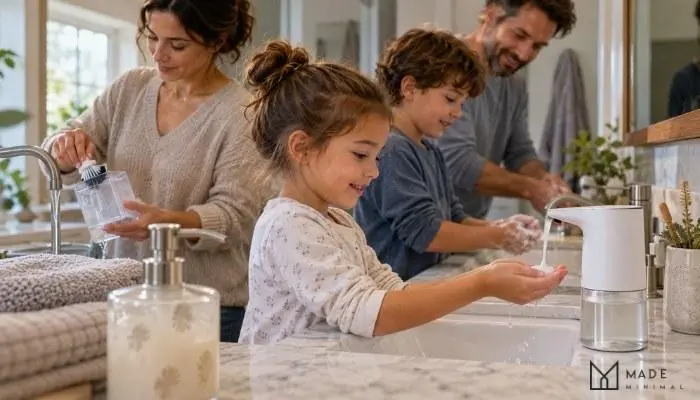
The automatic soap dispenser cost doesn’t end at the register. You also pay for refills, batteries, and upkeep across 12 months. Here’s how to figure out what each type of dispenser will actually cost you over a year.
Upfront Price: What Are You Actually Paying For?
A manual soap dispenser usually costs $5 to $15 at Australian retailers. It has a plastic body and a simple pump, with no sensors or batteries. However, with daily use, these plastic dispensers can last between 6 and 24 months (meaning you may need to replace the dispenser).
On the other hand, an automatic soap dispenser sits between $30 and $70 for most mid-range models. The higher price covers features such as infrared sensors, adjustable soap settings, and durable materials like stainless steel or ABS plastic. Premium wall-mounted models with rechargeable batteries and a sleek finish can climb past $130.
One thing worth noting: a higher purchase price doesn’t always lead to cheaper running costs. Some premium models rely on proprietary refill cartridges instead of an open reservoir. Those cartridges can cost twice as much as a standard 1-litre liquid soap bottle from the supermarket.
Soap Dispenser Running Cost: Refills, Batteries and Power
Soap refills are where most of your money goes over a year. A 1-litre hand soap refill at Coles or Woolworths runs between $3.80 and $8.00, depending on the brand.
For a household of four with around 20 handwashes a day, a 500ml reservoir lasts about 25 days with an automatic dispenser that releases 1ml per wash. With a manual dispenser that releases a larger amount per pump, the same reservoir lasts around two weeks.
How quickly you go through that soap also depends on the amount dispensed with each wash. A manual pump releases around 1.5ml to 2ml per press, while an automatic model dispenses about 1ml per activation. Although the difference seems small, it adds up over time. Over a year, a touchless dispenser could reduce soap consumption by 30% to 50%.
Soap is only one part of the running cost, though. Battery-powered models usually need four AA batteries, with each set lasting around 2 to 3 months under daily family use. So you may need four to six packs a year, costing roughly $4 to $8 per pack.
USB-rechargeable models avoid this recurring expense, although they typically cost $10 to $20 more upfront.
What Does a Soap Dispenser Cost Over 12 Months?
Now let’s put the numbers side by side. The table below is based on a family of four in Australia, 20 handwashes per day, using a $5-per-litre liquid soap refill.
| Cost Factor | Manual Pump | Automatic Dispenser |
| Initial purchase | $10 | $50 |
| Soap refills (12 months) | $30 to $40 | $15 to $25 |
| Batteries or charging | $0 | $8 to $16 |
| Cleaning and maintenance | $0, just time | $0, just time |
| Estimated first-year total | $40 to $50 | $73 to $91 |
This comparison assumes a household washes its hands 20 times a day and pays $5 for each 1L soap refill. A manual pump dispenses around 1.75ml per press, while an automatic dispenser uses about 1ml per wash. For battery-powered models, the calculation also includes four packs of AA batteries per year, at $4 per pack.
Based on these figures, an automatic dispenser costs more in the first year because of its higher purchase price and battery expenses. However, its smaller soap doses mean you need fewer refills over time. Across two to three years, those savings can help offset the initial cost.
Still, savings aren’t a given for every household. Models that require proprietary refill cartridges can double your soap costs, while battery replacements add to ongoing expenses. So, the safest approach is to go with a refillable automatic dispenser that uses standard AA or rechargeable batteries, since those keep both soap and power costs predictable.
Can an Auto Soap Dispenser Save Money on Hand Soap and Personal Care?
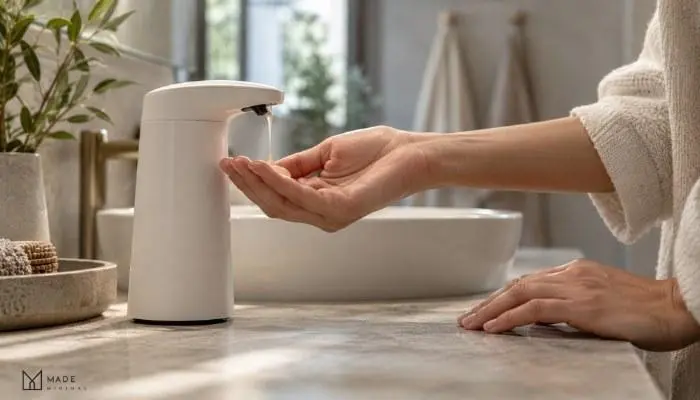
Yes, an automatic soap dispenser can reduce your yearly hand soap spending, but only if the model controls dosage well and uses affordable refills. The savings come from consistency, not from the dispenser itself.
Let’s look at what helps, what hurts, and what to check before you buy.
Does Automatic Soap Dispensing Really Reduce Waste?
A touchless dispenser releases about 1ml of soap each time the sensor picks up your hand. A manual pump, on the other hand, pushes out around 1.5ml to 2ml per press. And most people press at least twice, which doubles the amount per wash.
That difference sounds small on its own. But for a family of four washing hands 20 times a day, an automatic dispenser can save around 18 litres of soap per year compared with a manual pump. At about $5 per litre for a standard Palmolive or Dettol refill from Coles, that’s $35 to $50 less on hand soap alone.
Many models also let you adjust soap output across 3 to 4 levels, depending on the soap type you use. That said, some sensors can misfire when water splashes nearby, or an object sits too close to the nozzle. Those false triggers waste soap and drain batteries faster.
So your actual savings will depend on how well the dispenser behaves and how your household uses it day to day.
Hidden Costs: Clogs, Batteries and Replacement Parts
Dried soap residue inside the nozzle is the most common problem with automatic dispensers.
Thick or creamy hand soap, like moisturising varieties, clogs them within weeks. And foam models only work with diluted soap, usually at a ratio of 1 part soap to 3 parts water. If you pour in undiluted liquid, the nozzle blocks up fast and the pump motor strains.
Water around the sensor can cause problems, too. Moisture on the infrared lens can cause false activations, or it can stop the sensor from reading your hand entirely. On top of that, if water gets into the battery compartment, it corrodes the metal contacts and cuts power to the motor. A quick wipe of the sensor and nozzle once a week prevents most of these issues.
Battery costs are another factor to consider. Models that use four AA batteries typically cost $8 to $16 a year to run, based on replacements every two to three months. Rechargeable USB models skip that ongoing cost but tend to run $10 to $20 more at purchase.
Neither option is automatically cheaper in every case. It comes down to how long the dispenser lasts before something breaks.
Pro Tip: Before buying an automatic soap dispenser, check the warranty length and what it covers. If a faulty sensor forces a full replacement after 12 months, any soap savings vanish with the cost of a new unit.
Wall Mount or Countertop: Which Soap Dispenser Fits Your Budget?
Wall-mounted dispensers free up bench space and sit further from the splash zone around the basin. They’re a solid fit for smaller bathrooms or shared spaces where you want the unit secure and out of reach of kids. Most come with adhesive strips or screws in the box, so installation takes about 10 minutes with no special tools.
Countertop models are even simpler to set up. You place them on the bench, and they’re good to go. The downside is they take up counter space and are easier to knock over, especially in busy family bathrooms where things get bumped around a lot.
The mounting style itself won’t change your running costs much. What will is how easily you can refill the dispenser, how well the battery compartment stays dry, and whether you can adjust the amount of soap it releases.
For families, shared bathrooms or anyone with limited hand mobility, a touchless wall mount with adjustable soap levels tends to be the most practical pick. Less contact with shared surfaces supports better hygiene too, though no dispenser on its own can guarantee protection against illness.
Choosing an Automatic Soap Dispenser That Lasts
Price alone doesn’t determine an automatic soap dispenser’s long-term value. For example, a $30 model with a refillable reservoir, standard AA batteries, and a 12-month warranty may cost less over three years. In comparison, a $90 model that relies on proprietary cartridges priced at $8 to $12 each can have higher running costs.
So before you commit, check a few practical things. Make sure the reservoir opens easily for a quick refill without removing the whole unit from the wall. Then look at whether the nozzle can be cleaned with warm water or swapped out if it clogs beyond repair.
And don’t forget to confirm the battery compartment is sealed against moisture, especially if the unit sits near a sink or in a steamy bathroom.
Our team at Made Minimal stocks a range of automatic soap dispensers designed for Australian homes. We focus on products that are affordable, well-built, and easy to maintain over the long run.
Choose the Right Automatic Soap Dispenser for Your Budget
So, is an automatic soap dispenser worth it over a full year? That depends on three things:
- The purchase price
- How much you spend on soap refills
- What batteries or replacements end up costing
A manual pump will usually be the cheaper option in year one. But an automatic model pays you back in other ways, like controlled dosage, touchless operation, and less contact with shared surfaces. Those benefits still count even when the numbers don’t show a clear saving.
If you’re trying to decide, start by adding up your household’s soap usage and battery needs. A refillable model with adjustable output is a good long-term choice for most families. You can browse our range at Made Minimal to find one that fits your home and your budget.
Also Read
- Top Construction Estimating Services in the USA
- 224+ Marriage Puns That Prove Love Is a Life Sentence in the Best Way
- What Does NFS Mean in Text? Common Meanings, Uses, and Examples (For 2026 Updated)

