

In recent years, solar power has grown into a major component of both new home and business construction design. But when a roof is repaired, replaced, or has other structural upgrades made, the presence of installed solar panels adds another layer of complexity. Property owners will have to find ways to safeguard their solar systems so that roofing contractors can perform their jobs safely and quickly.
The traditional way of thinking about how to take down and put back up solar panels when you do work on your roof has changed. Contractors today treat the removal and installation of solar equipment as an integral part of the overall project planning for any type of roof renovation. Understanding this whole process can save you money, keep your solar system safe, and ensure that your home continues to produce electricity from the sun.
Why Roof Renovations Require a Different Solar Approach
Older roof systems can develop a number of issues over time, including leaks, damaged shingles, weakened flashing, and structural problems. These issues can be even worse when Solar Panel Installation Services anne-arundel-county have been previously installed on the roof since mounting hardware and electrical connections will be attached to the roof structure.
Previously, many property owners had to make repairs to their roofs, but they never thought about the longevity of the solar systems installed there. In recent years, renovations have included more communication among roofing contractors and solar installers.
The first thing you have to determine is if the roof will require a quick fix (minor repair) or a full replacement. That will help determine how many panels need to be taken down, what is done with the mounting hardware, and when the system can start working again.
Important considerations before starting a renovation:
- Inspect the roof for moisture damage and weakened areas.
- Identify the solar panel mounting system.
- Review equipment warranties and installation records.
- Check electrical connections before disassembly.
- Coordinate roofing and solar contractors to avoid scheduling conflicts.
A detailed assessment of a property will allow the owner to determine what needs to be done on the property prior to beginning work.
Professional Solar Panel Removal Is Becoming More Important.
Solar panel removal does more than just unplugging and taking off the panels from the roof. Each panel is a component of a larger electrical system, including wiring, connectors, mounting rails, inverters, and possibly battery storage.
Professional technicians will use a predetermined removal method to ensure the safety of the equipment and all individuals involved in the removal of the panels from your roof. Damage may occur during the removal if the panels are not handled properly. This could include damage to the panel frame, electrical wiring, or mounting hardware.
Digital documentation is used by modern solar companies to document the location of panels, how they are wired, and the configuration of each system prior to being removed. The digital documentation allows for the removal process to be more orderly and minimizes the chance of installation error.
If you are a property owner considering Solar Installation Services in Richmond, VA, you will want to find a contractor that knows about the solar equipment, but also knows what is required to do a roof renovation project.
A professional removal process generally includes:
- Safely shutting down the solar system.
- Following the manufacturer’s electrical isolation procedures.
- Disconnecting and labeling electrical connections.
- Removing panels without damaging their frames.
- Storing equipment in a clean and protected location.
- Recording the condition of panels and mounting hardware.
Important note: Solar equipment must be removed only by qualified personnel. Removal of solar equipment requires proper electrical isolation and handling techniques, which can be accomplished only by professional personnel with adequate training.
New Roofing Materials Are Changing Reinstallation Methods
The technology used for roofing has made great strides. Many times, today’s renovations will use different kinds of materials that require different types of installation methods. Materials such as metal roofing, architectural shingles, synthetic roofing products, and even some of the new high-tech waterproofing systems can all affect the way solar panels are mounted on your roof.
As an example, if a homeowner replaces their traditional shingles with standing-seam metal roofing, they will likely have to use a different method of mounting. There are some types of metal roofing systems that use specialized clamps which can be attached to the roof without penetrating it, as is typically done with other forms of roofing. This depends upon the type of roof that was installed and the manufacturer’s requirements.
Likewise, improved waterproofing materials and enhanced flashing systems can minimize the potential for leaks at solar mounting locations.
When you reinstall your roof, make sure you take into consideration the changes made to the existing roof structure, rather than just copying how it was installed before.
Modern improvements worth considering include:
- Roof-compatible mounting hardware.
- Improved flashing and waterproofing systems.
- Corrosion-resistant mounting components.
- Updated cable management solutions.
- Better spacing for maintenance and ventilation.
- Mounting arrangements that accommodate future roof inspections.
The improvements to the roof being renovated will help make it better suited for extended use with solar energy.
Digital Technology Is Improving Solar Reinstallation Accuracy
The technology of removing and installing solar panels has changed significantly due to the increased use of digital tools. These tools provide the ability for contractors to document their current installations, assess the condition of the roofs on which they will be installing solar panels, and plan out where the equipment for the Residential Solar Panel Installer Virginia process will be placed prior to any actual labor taking place.
Drone technology provides a way to locate problems on a roof, such as a damaged section or an area that is hard to reach. Digital design software can be used to plan out where panels will go in relation to existing roof structures, vents, and other modifications.
In addition, current-day monitoring software allows technicians to compare the performance of a system prior to and post-renovation. The ability to do this will help technicians recognize issues that may have developed from the reinstallation process.
Technology-driven improvements include:
- Drone-based roof inspections.
- Digital panel layout documentation.
- Solar production monitoring applications.
- Advanced electrical testing equipment.
- Remote inverter diagnostics.
- Digital project scheduling and contractor coordination.
These devices will assist commercial property owners by decreasing project delays and improving communications among various service providers.
However, the use of digital documentation does not eliminate the need for an on-site inspection. The contractor will have to confirm that all of the components are securely mounted, that there is no electrical hazard, that water cannot enter the system, and that the system functions correctly prior to handing off the completed job.
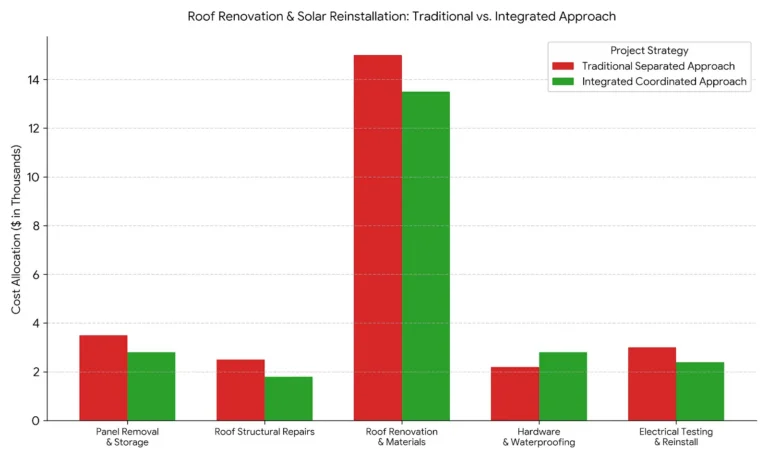
Solar Panel Removal & Roof Renovation Estimation Table
| Project Cost Category & Description | Traditional Separated Approach ($) | Integrated Coordinated Approach ($) | Article Context & Financial Impact |
| 🔧 Panel Removal & Storage | $3,500 | $2,800 | Safely shutting down, disconnecting, labeling, and storing panels in a protected location. |
| 🏗️ Roof Structural Repairs | $2,500 | $1,800 | Inspecting and fixing moisture damage, weakened areas, and deterioration before roof replacement. |
| 🏠 Roof Renovation & Materials | $15,000 | $13,500 | Replacing shingles, upgrading to metal roofing, or implementing new high-tech waterproofing systems. |
| 🛡️ Hardware & Waterproofing | $2,200 | $2,800 | Upgrading to roof-compatible mounting hardware, corrosion-resistant components, and enhanced flashing. |
| ⚡ Electrical Testing & Reinstall | $3,000 | $2,400 | Reinstalling panels, updating wiring connections, and performing professional electrical isolation tests. |
| 📊 Estimated Total Project Cost | $26,200 | $23,300 | Planning projects together avoids unexpected labor costs, emergency repairs, and scheduling delays. |
Cost Planning, Energy Downtime, and Project Coordination
During a roof replacement project, one of the major issues is the extra money that will be spent on taking off the solar panels and putting them back on. There are other things to think about besides the cost of the roofing materials and the work that will be done. You may also need to pay for taking down the solar panels, storing your equipment, replacing parts that are broken or missing, checking out the electricity used by the solar panels, and getting the system ready to use again.
Another major factor to consider when planning a renovation project is energy production. When the solar panels are uninstalled, the property will most likely rely on electricity supplied by the local utility company for a short period of time. It would be wise for business owners who have large electrical loads to plan their renovations around the potential for disruption of service.
Planning both of the projects at the exact same time will save you money on additional labor costs and unnecessary delays.
Key factors that influence project expenses include:
- Number of solar panels requiring removal.
- Roof size, slope, and accessibility.
- Condition of existing mounting equipment.
- Distance required for safe equipment storage.
- Whether new wiring or mounting hardware is necessary.
- Complexity of electrical reconnection and testing.
A comprehensive estimate should be requested by property owners, with an emphasis on distinguishing between costs associated with the installation of the roof and those associated with the installation of the solar system. This separation will make it possible to compare estimates from different contractors and determine what each contractor is responsible for performing.
Budgeting advice – Have an adequate budget available for emergency repairs on older roofs when you are going to remove the panels, as there could be some hidden damage caused by water leaking through the roof or deterioration of the mounting equipment used to secure the panels.
Final Thoughts
The process of removing and reinstalling solar panels is becoming increasingly coordinated with the process of renovating roofs. Many property owners now realize that both the renovation of their roofs and the installation of their solar equipment should be planned together as part of one project instead of being managed as two separate projects.
The installation of a more secure mounting system, the use of digital inspection techniques, the creation of an effective waterproofing system, and the completion of a professional electrical test make the entire process more streamlined. These advancements will both safeguard your costly solar system and provide long-term reliability on your newly renovated roof.
Frequently Asked Questions
Q1. Do solar panels need to be removed when replacing a roof?
In most cases, yes. When the roof under the solar panel needs to be replaced, the panels and mounting equipment will have to be removed so that there is adequate space for workers to replace the roof.
Q2. Can existing solar panels be reused after roof renovation?
Yes, the panels may be able to be reinstalled on the new mounting arrangement if they are still in good operating order and will work with the new mounting system.
Q3. How long does solar panel removal and reinstallation take?
The amount of time required for your project will vary depending upon the number of panels, the complexity of your roof, the condition of your existing equipment, and the overall scope of the renovation. Working with a roofing contractor as well as a solar contractor can help to reduce delays.
Q4. Will removing solar panels affect their warranty?
The duration of a product’s life may vary based upon the warranty provided by the manufacturer of the product, as well as the way that the product is cared for. Property owners are encouraged to review the terms of their warranty and to utilize the services of qualified professional(s).
Q5. Should solar panels be inspected after reinstallation?
Yes, technicians need to check for loose mounting hardware, electrical wiring problems, possible leaks due to lack of weatherproofing, and to ensure the inverters are working properly prior to putting the systems back online.
Also Read-Why You Should Assess Office Spaces Before You Buy Commercial Property

