

Introduction
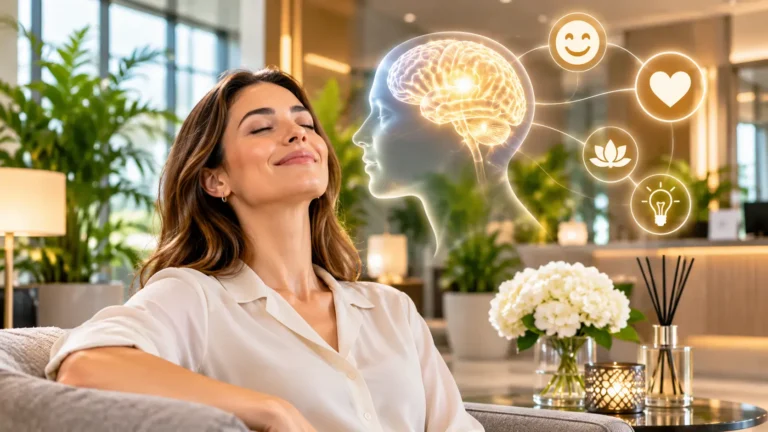
The environments people experience every day have a significant influence on their emotions, behaviour, comfort, and overall perception of a place. Whether entering a hotel lobby, shopping centre, office, restaurant, healthcare facility, or residential building, individuals continuously respond to different environmental elements. Lighting, colours, temperature, sound, furniture arrangement, air quality, and fragrance all contribute to the way an indoor space is experienced. These factors work together to create an atmosphere that can influence whether people feel relaxed, comfortable, focused, or overwhelmed.
The psychology of indoor environments is closely connected to environmental psychology, a field that examines the relationship between human behaviour and physical surroundings. Researchers in this area study how environmental conditions affect emotional responses, attention, social interactions, and decision-making. Understanding these relationships helps architects, interior designers, business owners, and facility managers create spaces that support human needs rather than focusing exclusively on visual appearance.
Modern indoor design increasingly considers multisensory experiences, recognising that people do not evaluate environments through sight alone. Smell, hearing, touch, and temperature also contribute to environmental perception. By combining scientific knowledge with thoughtful design, organisations can develop indoor environments that feel welcoming, functional, and memorable.
Understanding the Psychology of Indoor Environments
Environmental psychology explains how physical surroundings influence people’s thoughts, emotions, and actions. An indoor environment contains numerous stimuli that the brain continuously processes, including visual patterns, background sounds, smells, spatial arrangements, and changes in temperature. These stimuli can influence how individuals interpret their surroundings and decide how to respond.
One well-known framework used to understand environmental influences is the Stimulus-Organism-Response model. It explains how external environmental conditions act as stimuli, producing internal emotional or cognitive responses that may subsequently influence behaviour.
For example, a brightly illuminated room with comfortable furniture and sufficient ventilation may create a perception of openness and convenience. A crowded environment with harsh lighting, excessive noise, and unpleasant odours may produce discomfort or encourage visitors to leave sooner.
Another important concept is environmental familiarity. People often feel more comfortable in spaces that are easy to understand and navigate. Clear pathways, recognisable layouts, appropriate signage, and consistent design features reduce confusion and help individuals interact with their surroundings more confidently.
The Influence of Lighting on Human Psychology
Lighting is one of the most noticeable elements of indoor environmental design. It influences visual comfort, the perception of space, and the way people interact with their surroundings. Both natural and artificial lighting contribute to the overall experience of an interior environment.
Natural daylight is particularly important because exposure to light helps regulate the body’s circadian rhythm, which influences sleep-wake patterns and daily biological activity. Workplaces that provide access to daylight and outdoor views can offer a more visually comfortable environment for employees.
Artificial lighting also plays an important role. Warm-coloured lighting is frequently used in relaxation areas, restaurants, and hospitality environments to establish a softer visual atmosphere. Brighter and more uniform lighting is generally appropriate for offices, educational facilities, and areas requiring detailed visual tasks.
The distribution of lighting matters as much as its intensity. Excessive glare, strong shadows, and poorly positioned light sources can cause visual discomfort. Modern lighting systems therefore use adjustable brightness, directional fixtures, and automated controls to create suitable conditions for different activities.
How Colours and Interior Design Affect Emotional Responses
Colours contribute to the visual identity of indoor environments and can influence how people interpret a space. Different colours are associated with different meanings and emotional responses, although these associations are influenced by cultural backgrounds, personal experiences, and environmental context.
For example, blue is commonly associated with calmness and stability, while green is often connected with nature and freshness. Warm colours such as orange and yellow can create a sense of energy and visual warmth. Neutral shades, including beige, white, and grey, are frequently used in modern interiors to create a balanced appearance.
Interior design also involves the selection of furniture, materials, textures, decorative elements, and spatial arrangements. Comfortable seating, appropriate furniture proportions, and sufficient movement space can improve the practical experience of an indoor environment.
A well-designed space should balance aesthetics and functionality. An attractive interior may create a positive first impression, but it must also support the activities taking place within it. For instance, a restaurant requires comfortable seating and suitable table arrangements, while an office needs functional workstations, collaborative areas, and spaces for concentration.
The Role of Fragrance in Creating Memorable Indoor Experiences
The sense of smell has a unique relationship with human emotions and memory. Unlike many other sensory experiences, olfactory information has strong connections with brain regions involved in emotional processing and memory formation. When people encounter a familiar fragrance, it can sometimes trigger memories of particular places, events, or personal experiences. This connection explains why certain smells can make an environment feel familiar, comforting, or recognisable.
The olfactory system detects airborne chemical compounds through specialised receptors located inside the nasal cavity. These receptors transmit information to the brain, where it is processed by structures including the olfactory bulb, amygdala, and hippocampus. The amygdala contributes to emotional processing, while the hippocampus plays an important role in memory formation.
In indoor environments, fragrance can contribute to the overall sensory identity of a space. For example, subtle floral notes may be used in relaxation areas, while fresh citrus fragrances are sometimes selected for reception spaces and commercial interiors. However, fragrance preferences differ between individuals, and the same scent may create different responses depending on personal experiences.
Modern fragrance technology allows businesses to introduce controlled aromatic experiences into selected areas. A Scent Machine can distribute fragrance through different diffusion mechanisms, helping maintain a consistent scent profile within designated indoor spaces. Depending on the technology, these systems may offer adjustable intensity, programmable schedules, and different fragrance distribution methods.
The objective should not be to make a fragrance highly noticeable but to create a balanced sensory environment. Excessive fragrance can cause discomfort, particularly for individuals with allergies, asthma, migraines, or fragrance sensitivities. Therefore, appropriate fragrance selection, controlled distribution, and effective ventilation are essential considerations.
Understanding the Importance of Sound and Acoustics
Sound is another important component of indoor environmental psychology. Background music, conversations, footsteps, and mechanical noise influence how people experience an environment. The auditory system continuously processes these sounds, helping individuals understand their surroundings and respond to different situations.
A comfortable sound environment can support communication, relaxation, and concentration. For example, restaurants may use carefully selected background music to complement their atmosphere, while offices often require acoustic conditions that minimise distractions during work activities.
Excessive noise can create stress and interfere with concentration. Open-plan offices are particularly challenging because conversations, telephone calls, and equipment sounds can overlap. Acoustic panels, sound-absorbing ceilings, carpets, and appropriate furniture arrangements can help reduce unwanted sound reflections.
Music selection also requires consideration of context. Slow and gentle music may be suitable for relaxation environments, while more energetic music may complement certain retail or recreational spaces. The volume should remain appropriate for the activities taking place, ensuring that background sound does not interfere with communication or comfort.
The Connection Between Temperature, Air Quality, and Comfort
Physical comfort is a fundamental part of a positive indoor experience. Even an attractive interior may become unpleasant when the temperature is uncomfortable, humidity is excessive, or ventilation is inadequate. These environmental conditions influence how people feel and interact with their surroundings.
Temperature regulation is particularly important in buildings where individuals spend extended periods. Heating, ventilation, and air-conditioning systems help maintain suitable indoor temperatures while supporting air circulation. Modern systems may use sensors and automated controls to adjust environmental conditions according to occupancy and building requirements.
Indoor air quality is equally important. Dust, airborne particles, volatile organic compounds, moisture, and other pollutants may affect the quality of indoor environments. Appropriate ventilation, filtration, regular cleaning, and moisture control help reduce these concerns.
Businesses should also understand the difference between improving air quality and introducing fragrance. A fragrance system cannot remove pollutants or replace ventilation. If an indoor space contains unpleasant odours, identifying and addressing their sources should always come before adding another scent.
The Influence of Spatial Arrangement on Human Behaviour
The arrangement of furniture, pathways, entrances, and shared facilities can significantly influence how people interact with indoor environments. Spatial organisation affects movement, accessibility, privacy, and social interaction.
For example, a hotel reception area should provide clear pathways between entrances, seating areas, and service counters. Similarly, a shopping centre requires understandable circulation routes that allow visitors to move between different departments without unnecessary confusion.
Crowded layouts can create discomfort because people may experience difficulty moving freely or finding suitable places to sit. On the other hand, excessively large spaces without clear organisation may feel impersonal or difficult to navigate.
Modern interior design often incorporates principles of human-centred design, which focuses on understanding the needs and behaviours of people using a particular space. Accessibility, comfortable movement, appropriate seating, and clear visual organisation are essential parts of this approach.
How Technology Supports Modern Indoor Atmosphere Management
Technological developments have made it easier to monitor and manage indoor environmental conditions. Smart building systems can integrate lighting controls, temperature sensors, ventilation equipment, air quality monitoring, and automated environmental adjustments.
These systems help facility managers maintain consistent conditions while reducing unnecessary energy consumption. For example, occupancy sensors can adjust lighting when rooms are not in use, while smart thermostats can regulate heating and cooling based on actual demand.
Fragrance technology has also developed considerably. Modern diffusion equipment can distribute selected fragrances through controlled mechanisms rather than relying exclusively on traditional air fresheners. A Scent Machine may use cold-air diffusion or other suitable technologies to distribute fragrance throughout a designated area.
Some advanced systems provide programmable operating schedules and adjustable fragrance intensity. These features can help businesses manage different environments according to their size, purpose, and operating hours. However, equipment selection should consider room dimensions, ventilation, maintenance requirements, fragrance formulation, and individual sensitivities.
Technology is most effective when it supports the overall environmental design strategy. Automated controls cannot compensate for poor building maintenance, inadequate ventilation, or unsuitable interior planning.
The Importance of Multisensory Design
Multisensory design involves combining different sensory elements to create a coordinated indoor experience. Rather than treating lighting, sound, fragrance, textures, and temperature as independent design features, this approach considers how they interact with one another.
For example, a wellness centre may combine natural lighting, comfortable temperatures, quiet surroundings, natural materials, and subtle botanical fragrances to establish a relaxing atmosphere. A modern retail environment may use carefully planned lighting, organised product displays, suitable background music, and pleasant indoor conditions to encourage comfortable browsing.
The concept of sensory congruence is particularly relevant here. It refers to how well different sensory elements complement one another. When the visual appearance, sound, and fragrance of an environment communicate a consistent atmosphere, the overall experience may feel more natural and harmonious.
However, adding more sensory elements does not necessarily improve an environment. Excessive lighting, loud music, strong fragrance, and competing visual displays may overwhelm visitors. Successful multisensory design requires balance, moderation, and an understanding of the people who use the space.
Personalisation and Individual Differences in Indoor Experiences
People do not respond to indoor environments in exactly the same way. Age, cultural background, personal experiences, sensory preferences, and individual needs can influence environmental perception. This makes personalisation an important consideration in modern interior and facility design.
For example, some people prefer bright and naturally illuminated spaces, while others may find softer lighting more comfortable. Some individuals enjoy background music, whereas others require quieter surroundings to concentrate. Fragrance preferences also differ significantly.
Businesses can address these differences by offering flexible environmental controls wherever practical. Adjustable lighting, individual temperature settings, quiet areas, and fragrance-free spaces can help accommodate a wider range of preferences.
In workplaces, employee feedback is particularly valuable because staff members may spend several hours each day in the same environment. In hotels and other hospitality facilities, guest surveys and service feedback can help management understand whether the indoor atmosphere meets visitor expectations.
Measuring the Effectiveness of Indoor Environmental Design
Creating a pleasant environment requires continuous evaluation rather than relying entirely on visual impressions or assumptions. Businesses can use customer feedback, employee surveys, indoor air quality measurements, temperature monitoring, and operational assessments to understand how effectively their environments are performing.
For example, facility managers can monitor humidity, ventilation performance, lighting levels, and temperature variations to identify areas that require improvement. Customer reviews may also reveal recurring concerns about noise, unpleasant odours, or uncomfortable indoor conditions.
When introducing fragrance technology, businesses can conduct small trials to understand how people respond before expanding its use. A Scent Machine should be evaluated according to its distribution consistency, fragrance intensity, operating efficiency, maintenance requirements, and suitability for the intended environment.
Regular assessments also help organisations identify potential problems before they affect the overall indoor experience. This approach supports more informed decisions and encourages continuous improvement in building management.
Conclusion
Creating positive and memorable indoor experiences requires a scientific understanding of human psychology, sensory perception, and environmental design. Lighting, colours, fragrance, sound, temperature, air quality, and spatial organisation all contribute to the way people interpret and interact with their surroundings.
Modern environmental technologies provide useful opportunities to improve these conditions, but successful design depends on balancing innovation with human needs. Businesses should prioritise comfort, accessibility, ventilation, cleanliness, and individual preferences when developing their indoor environments.
Ultimately, memorable indoor experiences are not created through a single decorative feature or technological solution. They emerge from the thoughtful integration of different environmental elements. When these elements work together effectively, indoor spaces can become more welcoming, functional, comfortable, and meaningful for the people who experience them.
Also Read
- What Does Pub Mean in Text? Meaning, Uses, Examples, and Replies (For 2026 Updated)
- Why Branded Pens Remain One of the Most Effective Promotional Products
- 224+ Marriage Puns That Prove Love Is a Life Sentence in the Best Way

